Join us at the FOTA CONNECT LEARNING SERIES

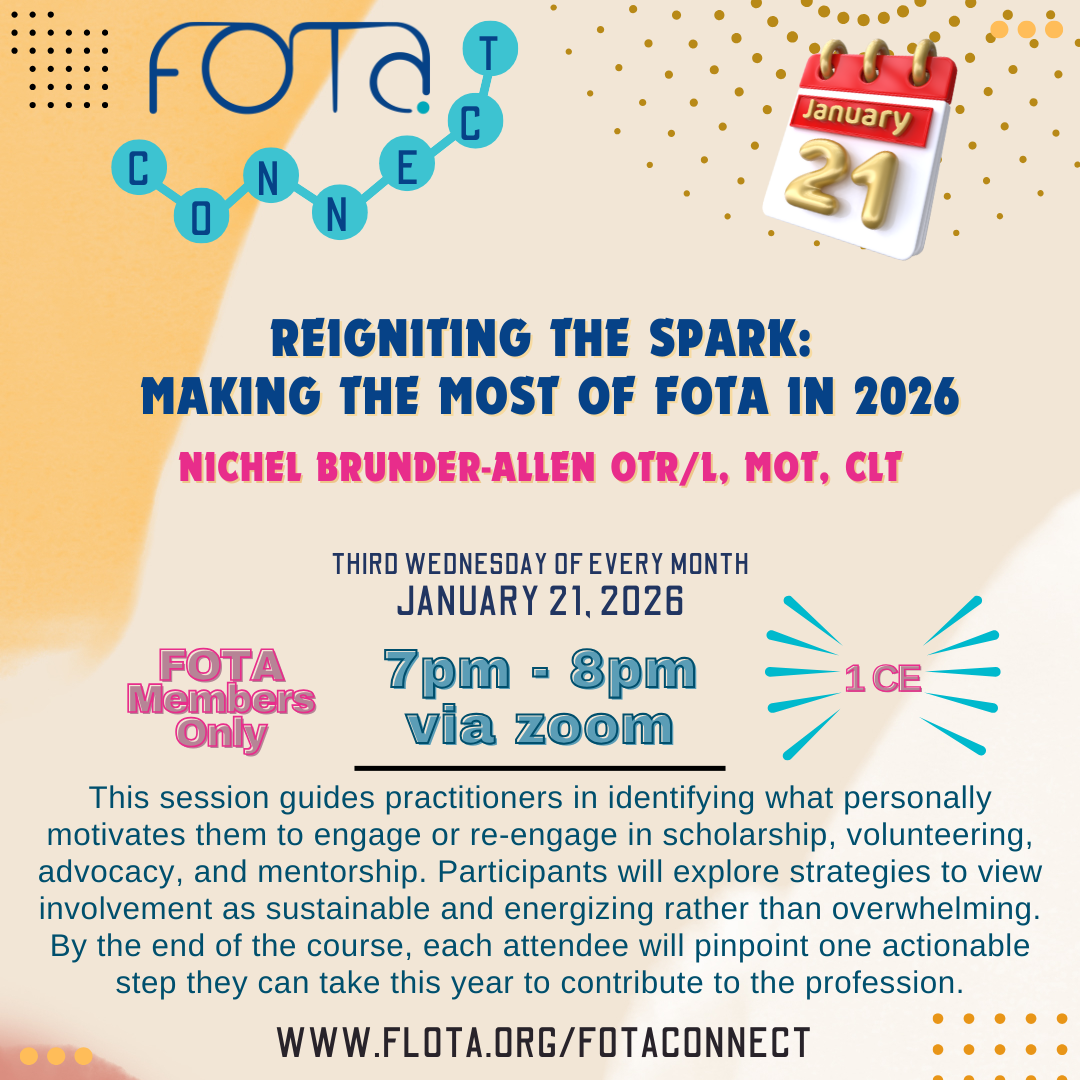
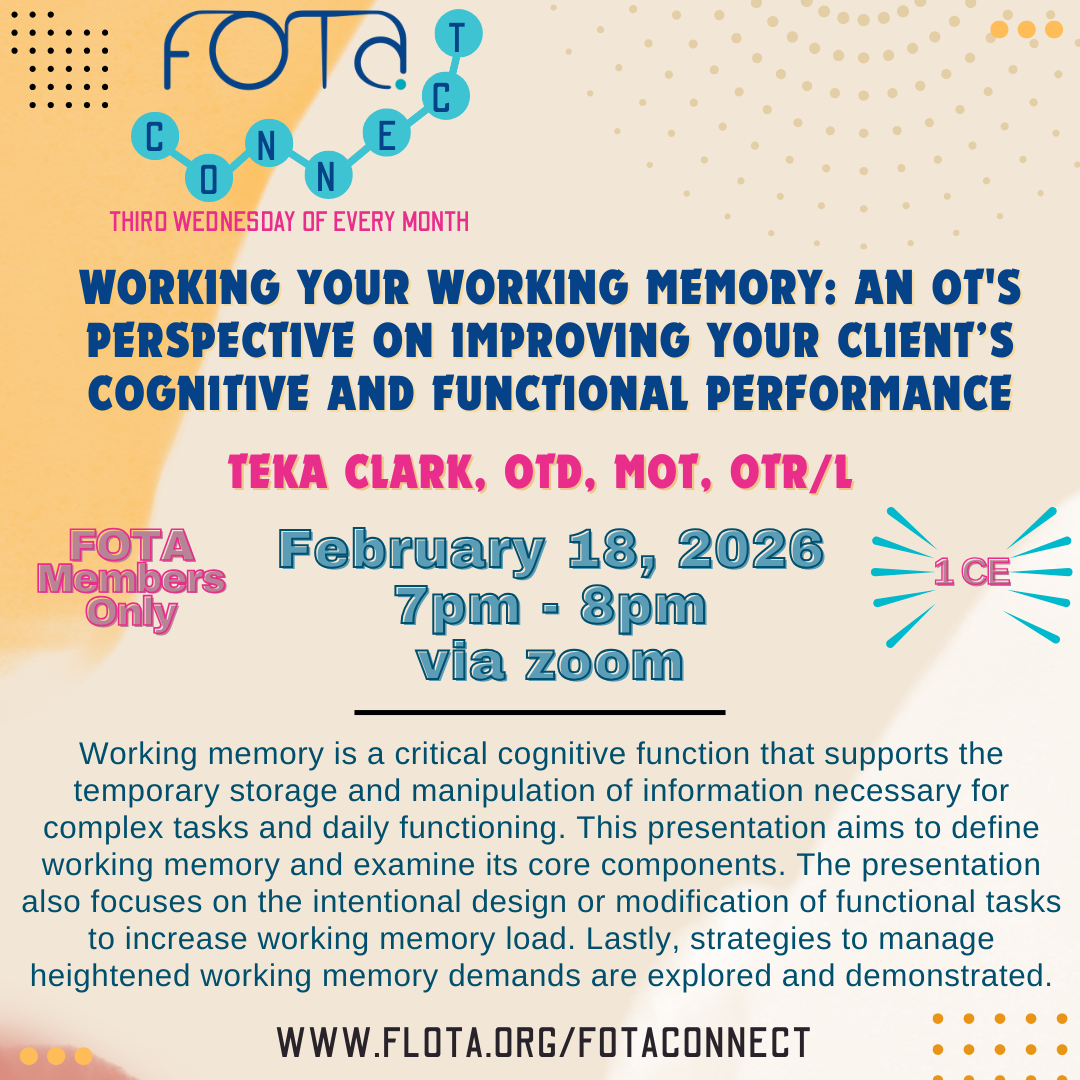
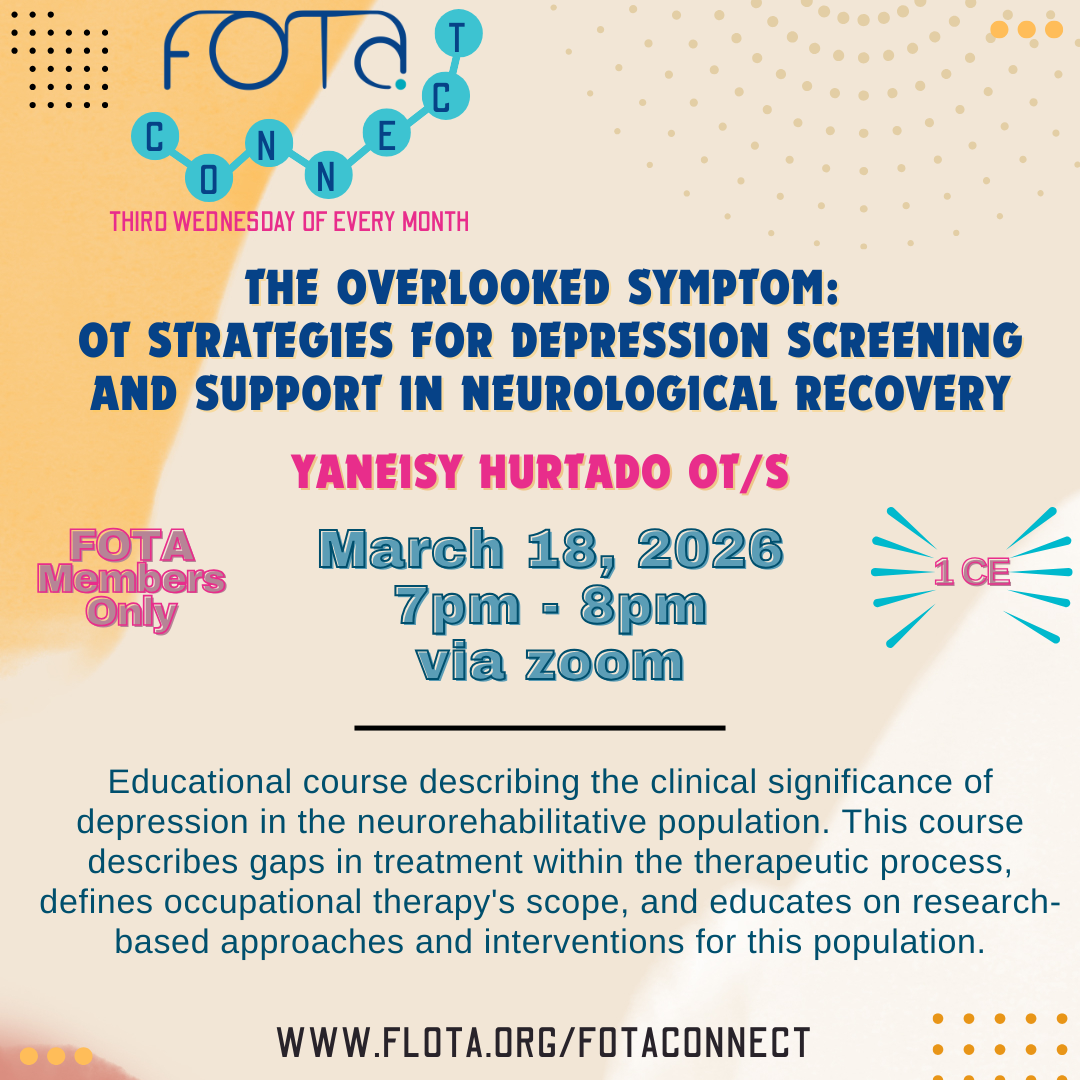
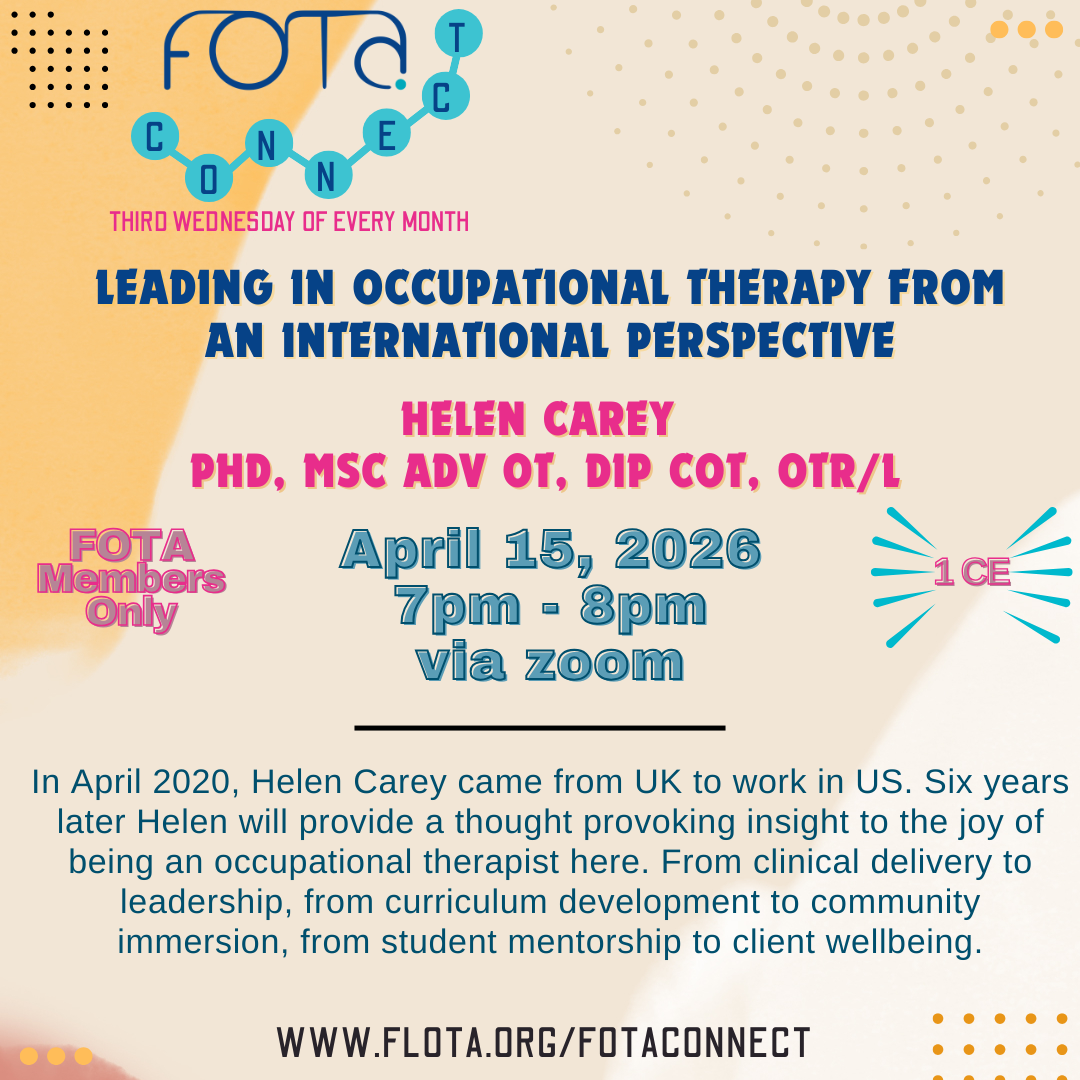
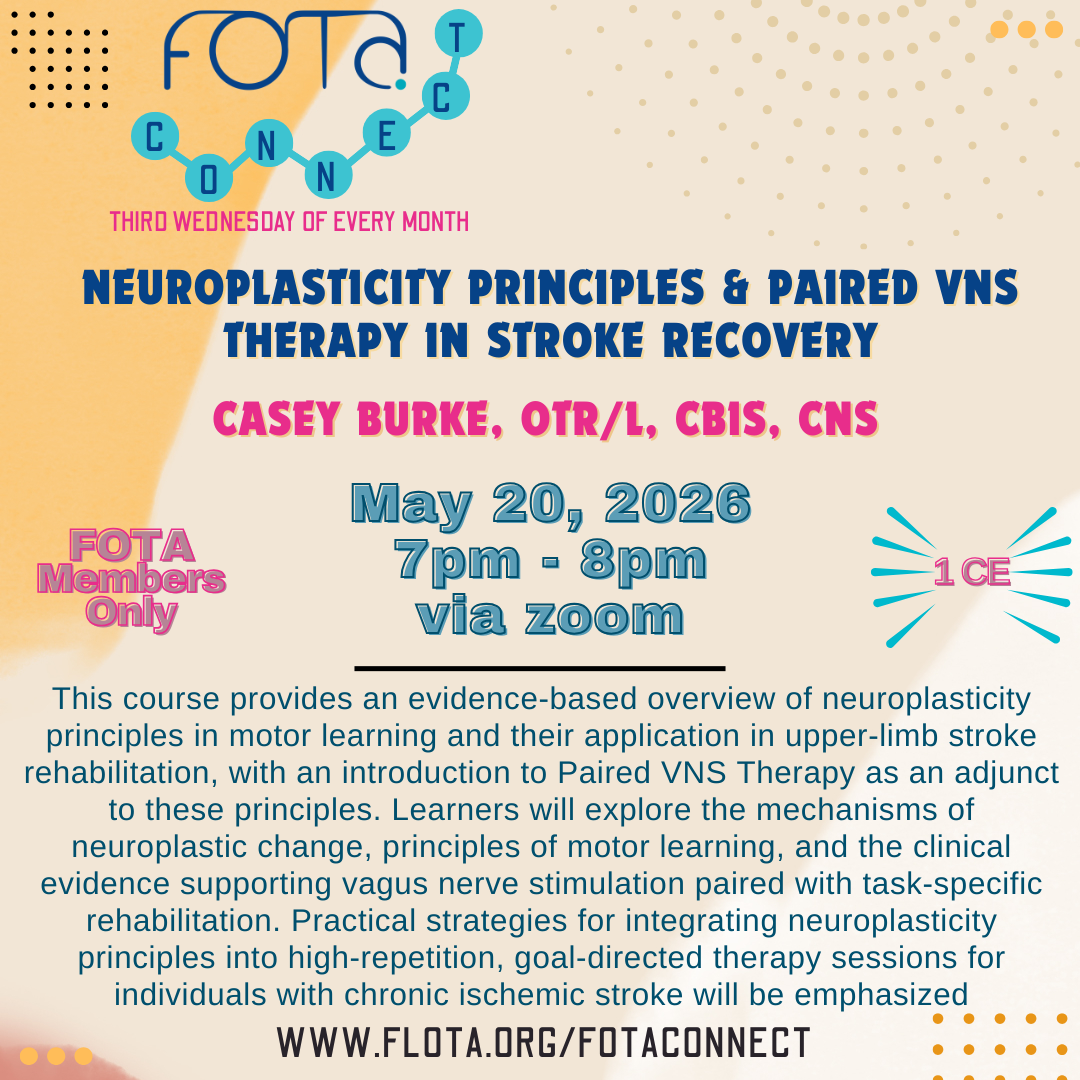
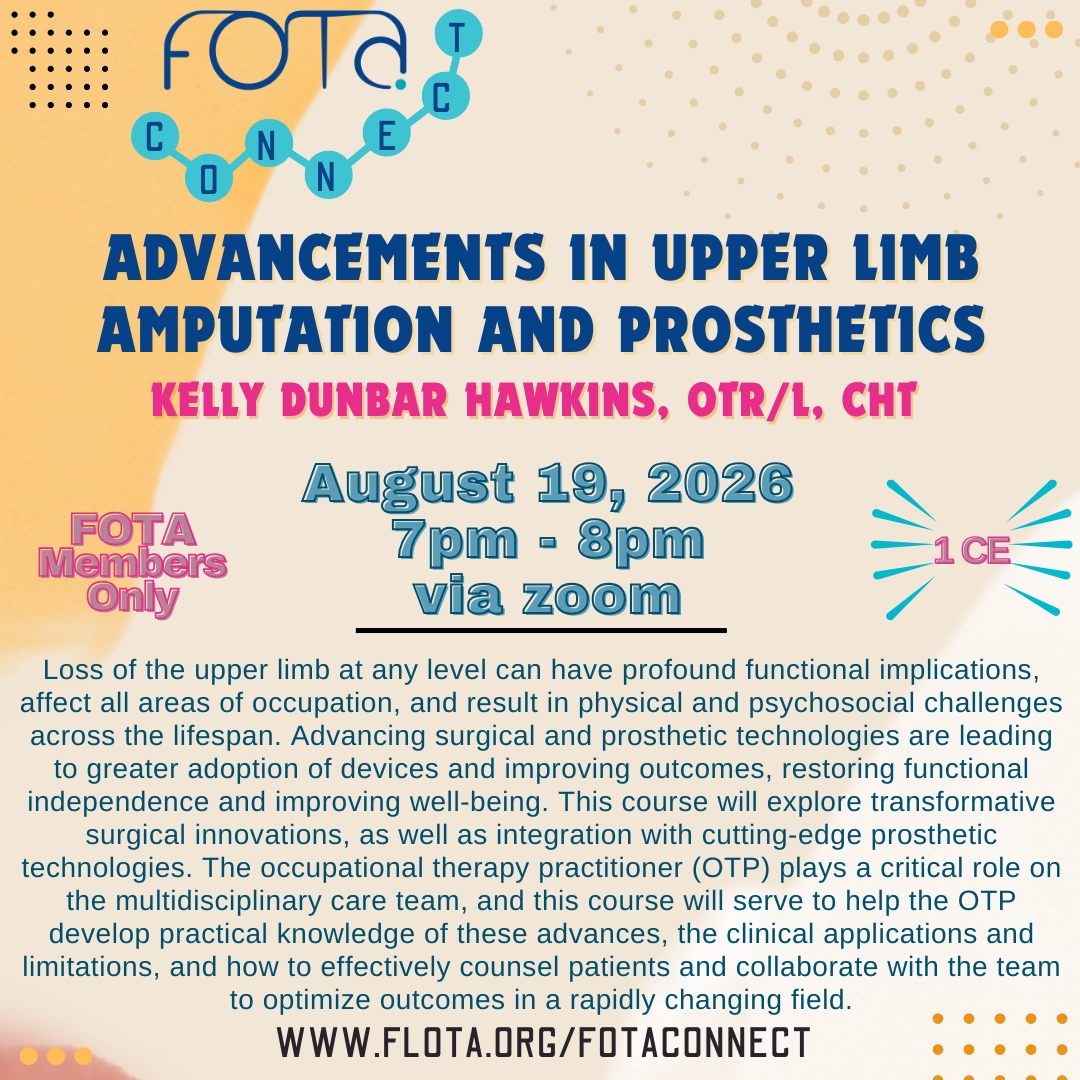
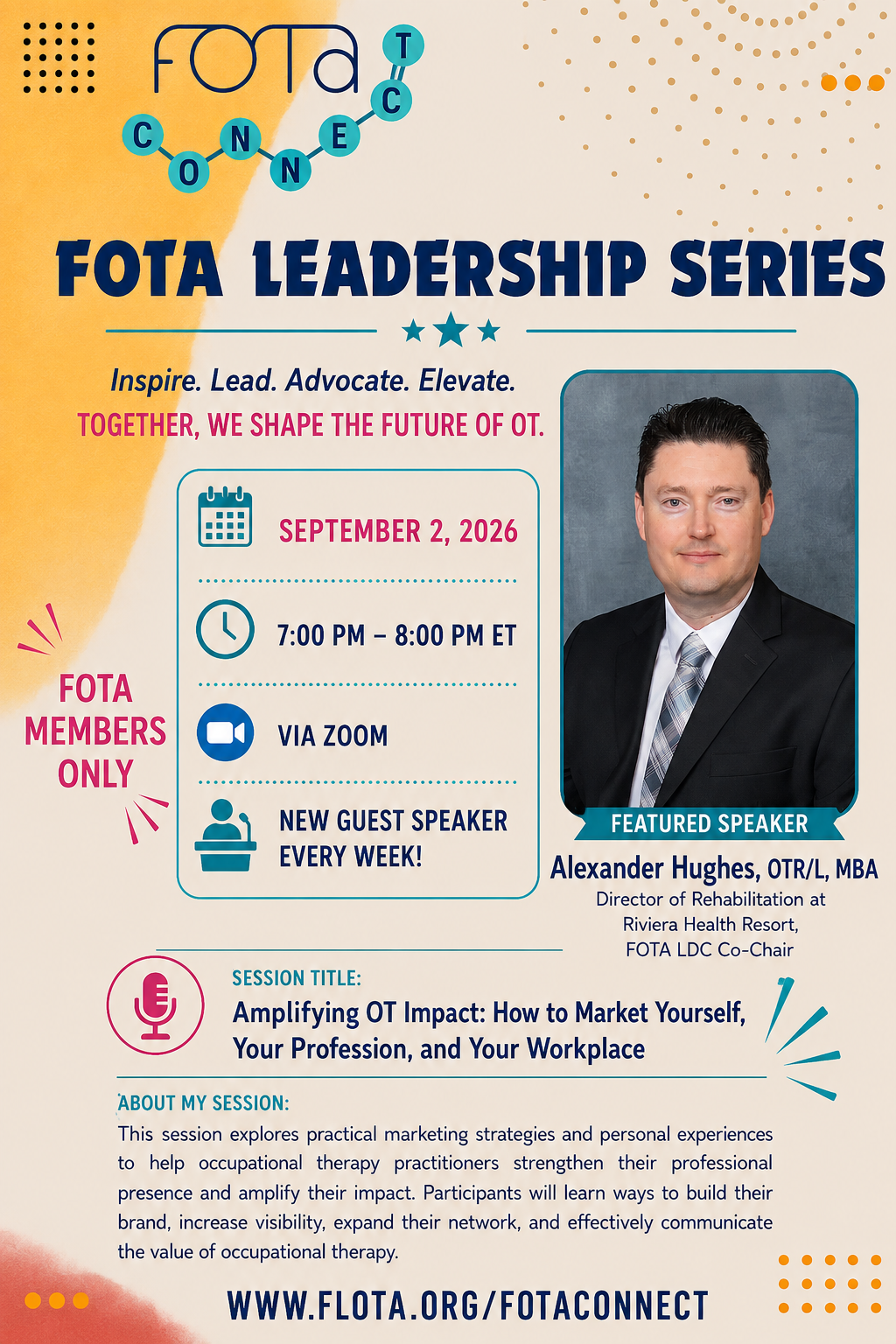
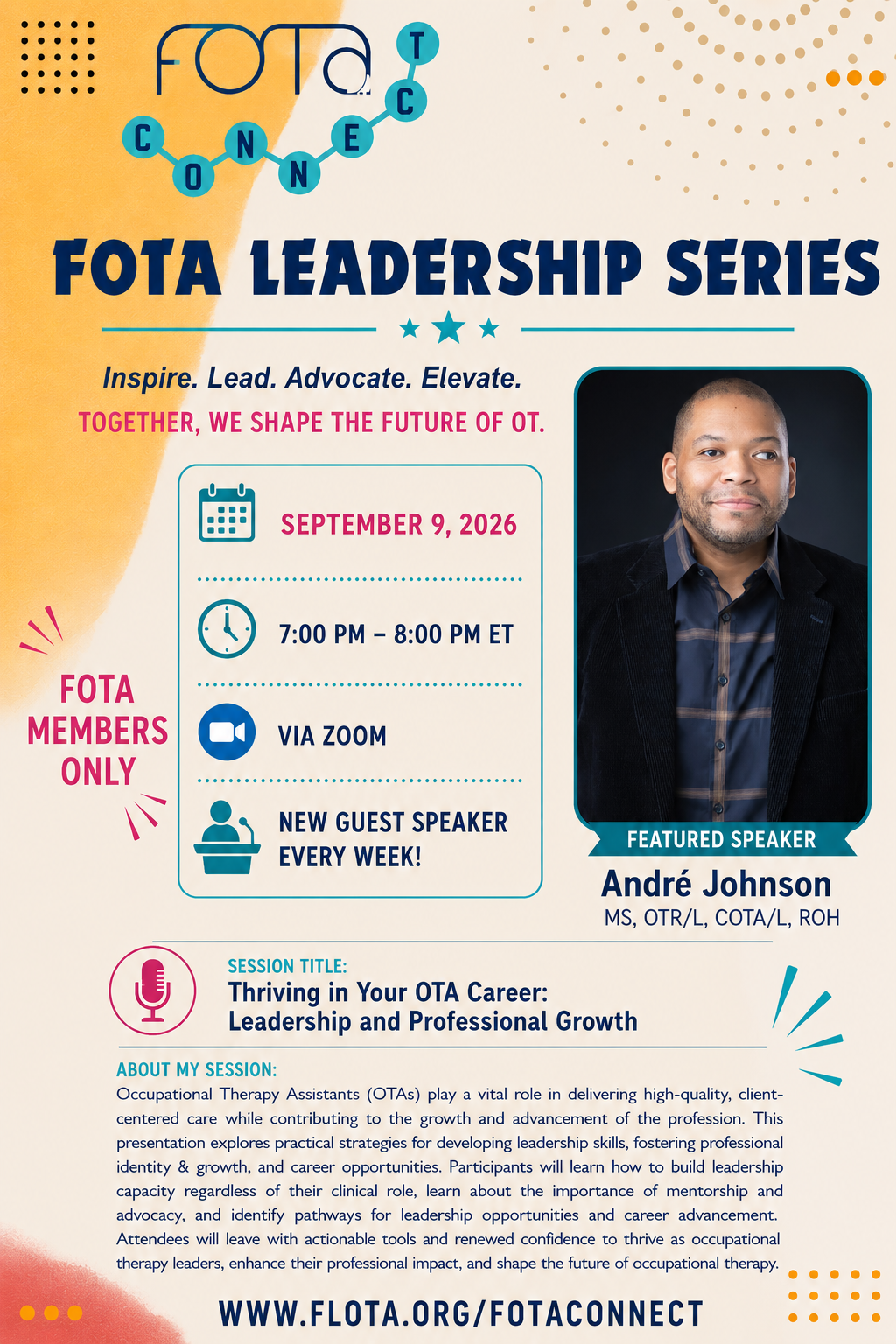
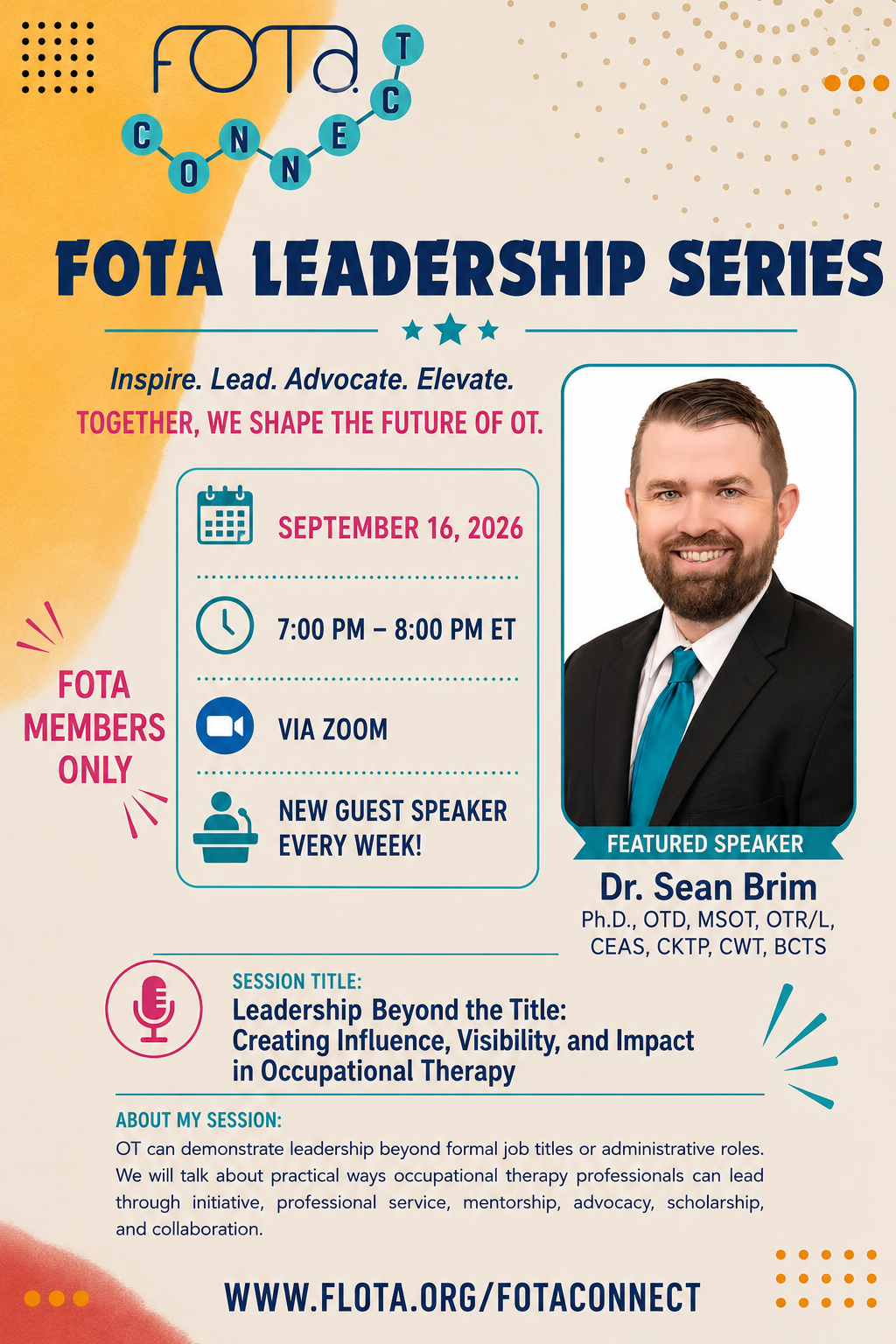
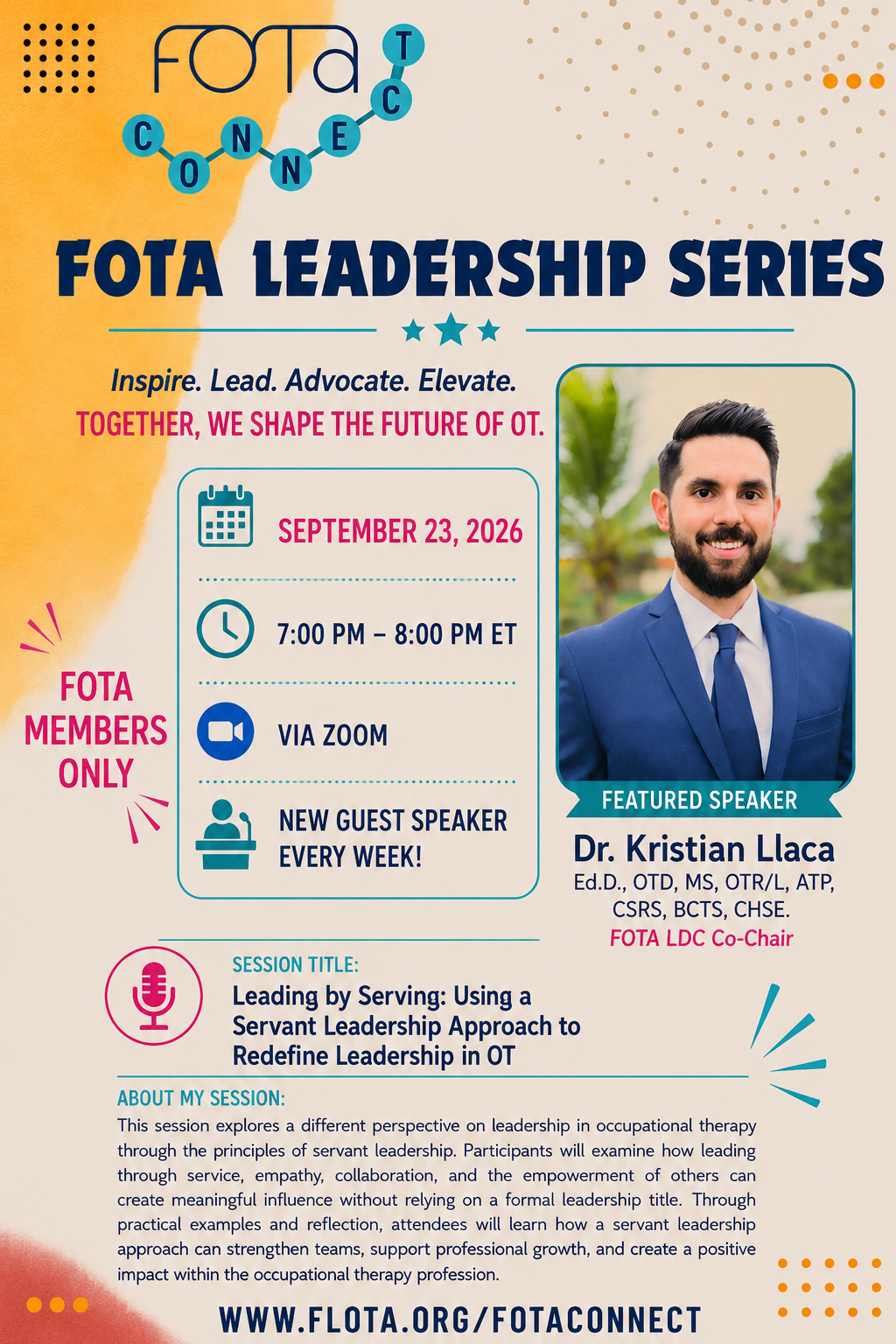
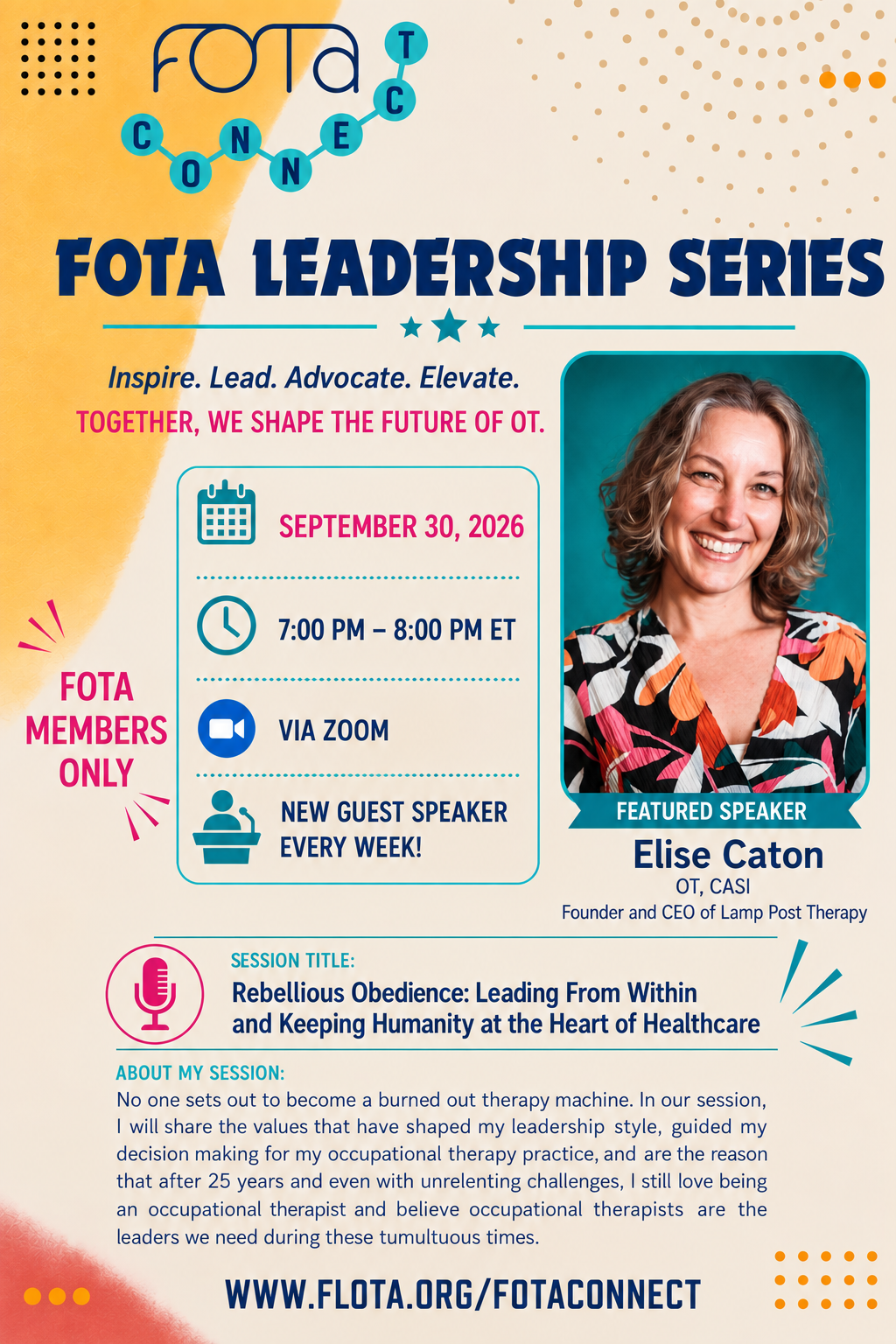
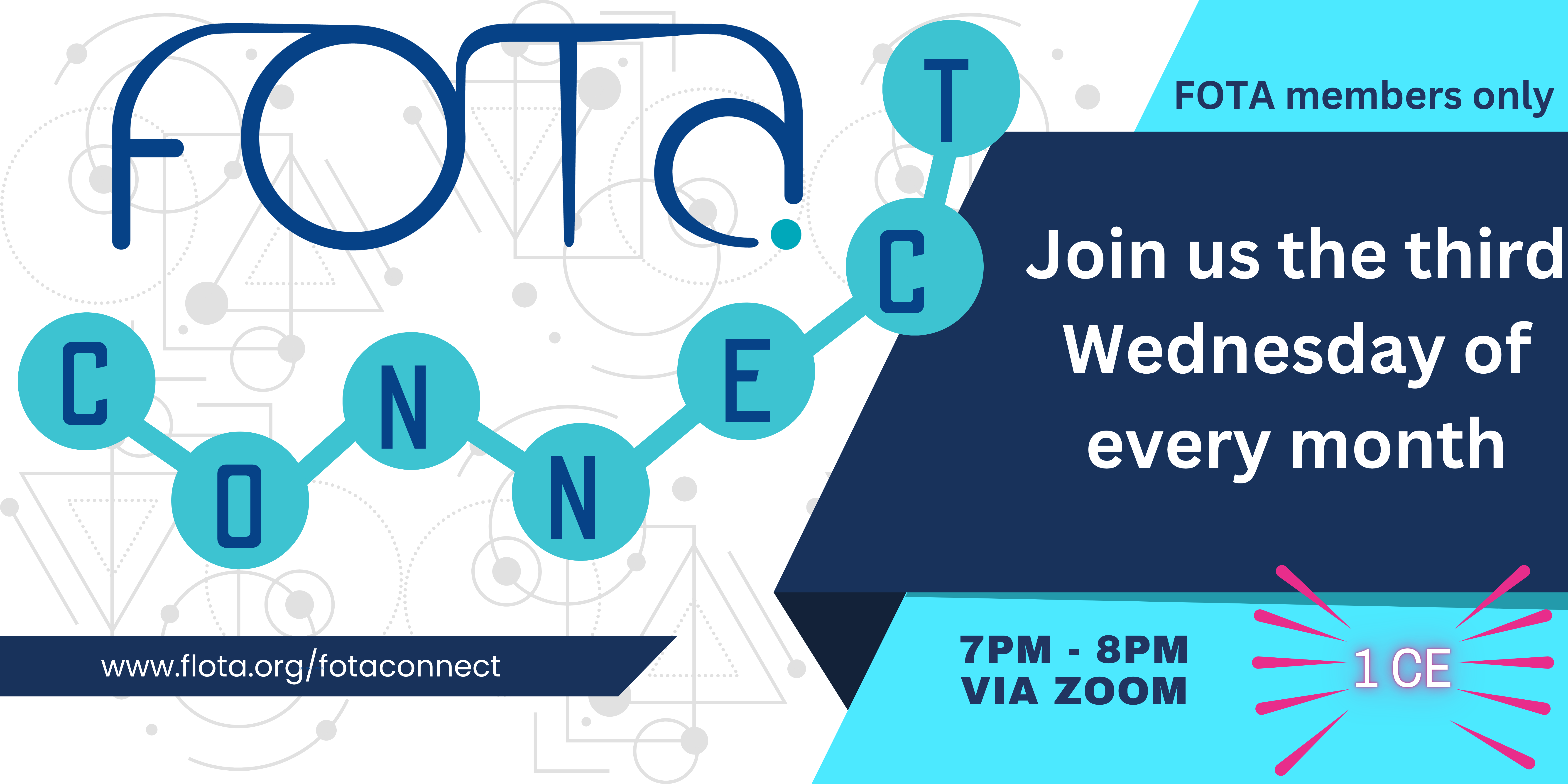
FOTA CONNECT is a way to connect with our members, fellow OT/OTA practitioners, students, educators and the general public to discuss and learn about Occupational Therapy related topics.

Would you like to present at one of our FOTA Connect Sessions? FOTA Members may submit to present for FOTA CONNECT sessions. To submit a proposal we require course description, abstract, objectives, speaker bio and CVs for CE Broker approval. Your proposal will be reviewed and if accepted, given a presentation time slot. Submit below to be considered. 

Submit here to present proposal for FOTA CONNECT 

2026 FOTA Connect Member Sessions

Course Title: Myth Busting the Application of Neuroplastic Principles

Speaker: Nicolas Harrington, OTD, OTR/L, BCPR

Course abstract: Neuroplasticity (the brain's ability to change) underlies nearly every intervention delivered in occupational therapy (OT). This presentation reviews Kleim and Jones' (2008) ten principles of experience-dependent neural plasticity (Use It or Lose It, Use It and Improve It, Specificity, Repetition Matters, Intensity Matters, Time Matters, Salience Matters, Age Matters, Transference, and Interference) and applies them directly to clinical decision-making in OT practice, reviewing common pitfalls for practitioners. By grounding intervention design in neuroplasticity research, clinicians can better structure treatment frequency, task specificity, and skill sequencing to maximize functional recovery and avoid common pitfalls in practice.

Course Objectives: 
Identify at least three neuroplasticity principles (e.g., Specificity, Intensity, Interference) that are commonly violated in OT treatment planning, and explain how each violation can lead to poor patient outcomes. Apply the principles of Repetition, Intensity, and Salience when designing intervention protocols, in order to avoid common dosing errors, such as under-repeating a task or selecting exercises that lack meaningful relevance to the client. Recognize situations where Interference and Transference effects may undermine treatment (e.g., competing motor patterns, poorly sequenced skill training) and adjust intervention design to prevent these common clinical mistakes.


2026 Past Sessions


Amazon searches starting from www.flota.org benefit FOTA!